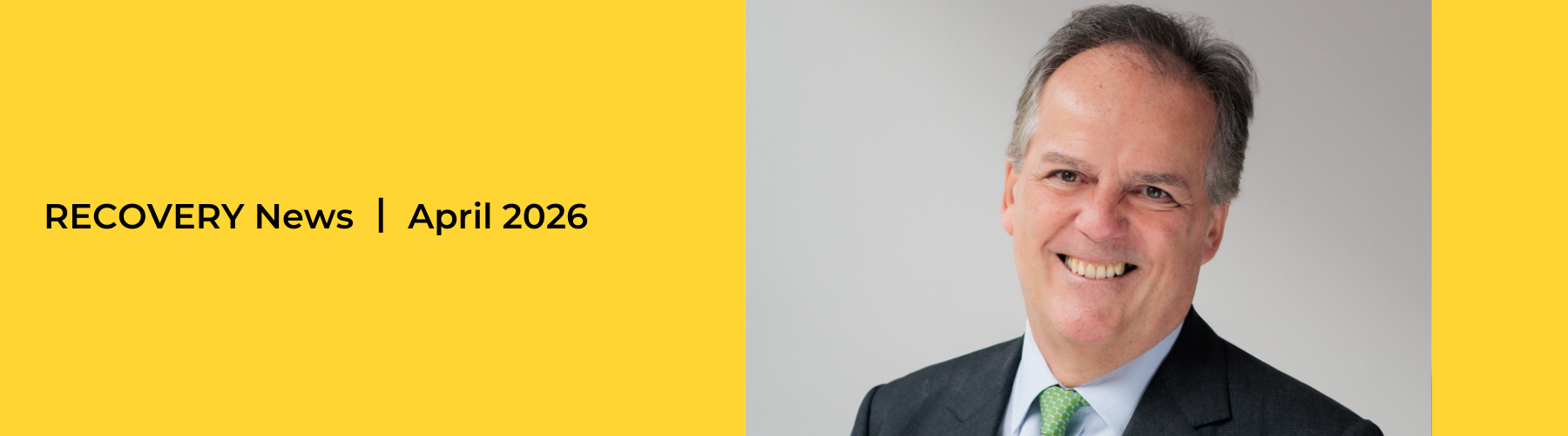
Building bridges with Westminster
29 April 2026
As a lawyer, businessman and former politician, The Rt Hon Mark Field is ideally placed to explain how R3 and our members can best engage with policy makers and MPs and why it matters. Mark shares some insights to whet our appetite ahead of his fireside chat at our annual conference in Budapest.
Q. Your career has taken you from City law to business to frontline politics and now you’re involved with business turnaround through Buchler Phillips - what’s the thread that connects those roles?
A. My interests have spanned public life, enterprise and professional services. I qualified as a lawyer during the recession of the early 1990s and was involved in restructuring work from a legal angle at Freshfields, one of the Magic Circle law firms. I then set up and ran my own recruitment firm before becoming an MP in my mid 30s for the City of London. I naturally gravitated to business-related policy areas during my time in Westminster, including being involved in the committee stage of the Enterprise Act 2002. I also served as a Minister of State in the Foreign Office.
When I left Parliament 20 years later in 2019, I was keen to avoid the world of lobbying but equally I thought I could put my political skills and knowledge to good use in a portfolio of non-executive corporate roles. I’d previously got to know David Buchler as a constituent and it felt like a natural fit to be able to use my background and experience to support his business [Buchler Phillips].
Q. Your conference session is about positively engaging with the political machine – what does that mean in practice?
The performative element of politics we see in the House of Commons and in the media often crowds out a lot of the hard work that happens away from the public eye, such as policymaking, scrutinising proposed legislation and constituency cases but this is where we can make a difference.
The message I want to get across to R3 members is twofold. First, to utilise R3 as an organisation that can link into government and maintain good relations with ministers who have insolvency responsibilities, especially as there may well be legislation coming in the near-term which directly affects our sector.
However, ministerial briefs are extensive and individuals may not be in post for long so another important task is to find a few constituency champions, from across the political divide, who are willing to engage on the issues around business turnaround and insolvency practice. R3’s regional committees are in a great position to make those connections.
Q. What’s the risk of not engaging with politicians?
A. Sadly, trust in politics is at an all-time low. That’s a challenge for MPs but it’s just as important that we build bridges with them. If we fail, we could start to see legislation that unravels very quickly or simply doesn’t achieve what was intended whether that’s protecting consumers or the rights of creditors.
We could also get blindsided by a major campaign which comes out of the blue, such as restricting pre-packs. If you’re constantly dealing with a blitz of material from all angles, you aren’t necessarily going to understand the value of restructuring, turnaround and insolvency professionals and how they help to save jobs so it’s important that organisations like R3 are there to put the case forward.
Q. What’s the most compelling way to explain the positive achievements of the profession?
A. I think we can engage with MPs by explaining how their own area might be impacted in the event of a downturn or corporate failure, ideally with some R3 data to show the potential knock-on effects to other businesses such as suppliers or even local high streets.
And we can then start a conversation – ideally with case studies – about how restructuring, turnaround and insolvency specialists can save businesses and jobs. It’s about getting the message across there are actually a lot of tools within the process to support businesses in distress, provided directors seek help as soon as they’re aware of problems. It makes sense to tap into R3 members’ depth and breadth of experience to do this.
Q. Do politicians have the wrong idea about restructuring, turnaround and insolvency practice and how can we change that perception?
A. There’s a misconception among some that insolvency practitioners are a bunch of ambulance chasers but there’s no point in sitting and bemoaning that. We’ve got to get out there and engage with politicians about the positive impact we can have for individual businesses and economic growth.
It might be MPs who we know are on relevant all party parliamentary groups (APPGs) albeit there isn’t one for insolvency - yet. Law firms or accountants who are R3 members may have already developed a good relationship with their MP and find they are receptive to learning more about insolvency. It could be as simple as forging links with your local MP by inviting them to open a new office.
Q. When you think about the current economic and business climate what are policymakers most focused in your view and how will this affect the profession?
A. Economic growth is the big challenge. I think governments of all parties have failed to deliver on that but it’s getting more urgent as our financial obligations – welfare, defence etc – increase.
It’s nearly a quarter of a century since the Enterprise Act but that was broadly about trying to ease the path of business to achieve growth. At the time we were trying to get to an insolvency process that was a halfway house between the EU and the US where there isn’t the same stigma about business failure. You dust yourself down and start again.
If we want to push for growth, perhaps we need to look again at how to emulate that aspect of the American business culture so there are more opportunities for people to pick themselves back up, alongside encouraging business turnarounds and some of the entrepreneurial drive you see in parts of Asia.
Q. What do you want delegates to take from your session?
A. I hope they’ll leave with the recognition that it makes sense to forge links with politicians. I also hope I’ll be able to breakdown some of the mystique surrounding the political process so R3 members feel more confident about engaging at ministerial level and with local constituency champions.