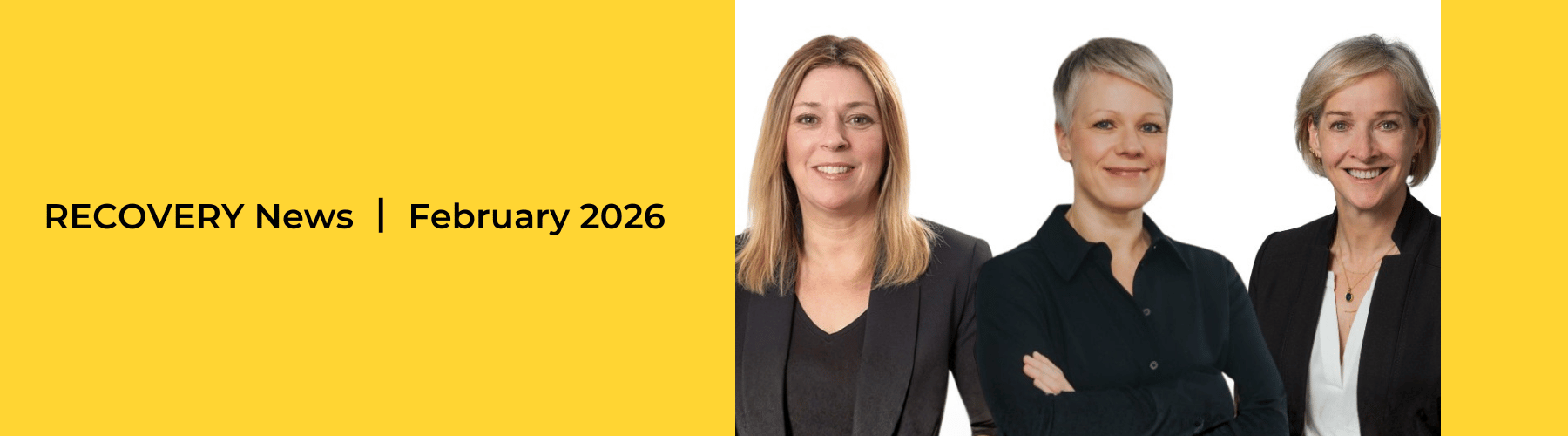
When women in restructuring, turnaround and insolvency succeed, everyone benefits
26 February 2026
Ahead of International Women’s Day, which takes place on 8th March, we spoke to three leading women in the profession about how they built successful careers in a demanding field, the challenges they encountered along the way and how the support of colleagues and family helped them thrive.
Despite progress, women remain underrepresented in the profession. R3 membership figures show a split of 63% male and 36% female (with 1% not specified), compared with a near-even gender split in the UK population. This gender imbalance is mainly seen in more senior roles and encouragingly, representation among new professionals is much closer to parity, signalling positive momentum.
Finding a way into the profession
Few people set out with a perfectly mapped plan. For many, a career in restructuring, turnaround and insolvency begins with curiosity and the confidence to seize an unexpected opportunity.
Sarah Rayment, Co-Lead of the Global Restructuring practice at Kroll, recalls:
‘My first experience of the profession was when the company I worked for entered administrative receivership in November 1990. I worked for the admin receivers PwC for six months and found the whole process fascinating. When I saw a job advert the following year for a position as an insolvency administrator at Levy Gee, one of the leading insolvency firms at the time, I applied and never looked back.’
Louise Durkan, partner at Deloitte LLP, explains her unconventional entry into the profession:
‘I chose to leave school after my A levels, university didn’t appeal to me. I applied to more than 100 accountancy firms before securing an interview with Ernst & Young’s insolvency team, where I was offered a role on the spot. I found the role fascinating – the variety, responsibility and opportunity to learn on the job made it incredibly rewarding.’
For Holly Holgate, newly appointed Partner in restructuring advisory at FRP, it was a summer placement that changed everything:
‘Like many people I fell into the industry but loved it from the moment I discovered it.
My original plan was to do a law conversion course following university and joined Deloitte’s restructuring services department to get some summer work experience. I went out on a trading administration and loved it so decided to stay and switch paths to accountancy.’
The power of role models
Behind each successful career stands a network of mentors, sponsors and allies who help build confidence and open doors.
Louise credits the influence of an early female leader explaining:
‘My first manager, Sue Clay, was a huge influence on me - technically brilliant, commercially astute and exceptional with clients and colleagues. She showed me that women absolutely had a place in this profession, and her support gave me the confidence and foundation to build my career.’
For Sarah, who joined the profession during a busy period in the 1990s recession, mentorship was also influential. She explains:
‘My main role model and mentor was Shay Bannon who was my senior manager at Levy Gee and subsequently the Head of Business Restructuring at BDO, which I joined in 2004. We worked very closely together on a vast number of assignments – he was a force of nature who is sadly no longer with us.’
Navigating challenges and flexible working
All three women reflect that being a woman has not held them back in their careers, though challenges remain.
Sarah reflects candidly: ‘Being female hasn’t necessarily been a barrier, but it hasn’t been plain sailing either. Thankfully attitudes to senior women have changed over the years. I have three grown up children now and a full-on career but juggling this in the earlier years wasn’t easy and I relied on a support network of nannies and grandparents. My firm was also supportive, and I was one of the first to work flexibly, with compressed weeks.’
Holly also explains that parenthood prompted innovation in working practices:
‘It sparked an idea to create a new team within Deloitte’s restructuring services department. That role and job share has had one of the biggest impacts on me and my progression.’
Louise highlights the importance of speaking up:
‘Mid-way through my career I discovered I was being paid less than male peers despite strong performance; I raised it and the gap was addressed, but it highlighted how important it is to have the confidence to speak up.’
The skills that shape successful leaders
Across all three interviews, a consistent theme emerges: technical expertise alone is not enough.
Holly explains: ‘There are a blend of skills needed including strong emotional intelligence, soft skills to enable you to build strong, trusted relationships, empathy, staying calm no matter what, the ability to simplify complex matters, creativity to help identify solutions, being a team player and resilience.’
Louise agrees adding: ‘Resilience is essential as this is a high-pressure environment where outcomes aren’t certain or always considered positive and sometimes the emotional impact can stay with you. You need empathy, inner strength and the ability to manage challenging situations calmly and professionally.’
Sarah echoes this emphasis on learning and confidence:
‘Don’t think you have to know all the answers and be ready to learn from all those around you, not just those more senior. Then be willing to take risks and put yourself forward for opportunities even if you think it will be a stretch.’
Building networks
For those entering or progressing within the profession, networks and support systems are critical.
‘Joining R3 and attending events from the age of 19 helped me build lasting connections and confidence,’ Louise comments.
Sarah adds: ‘Our profession is about continual development, not just technical knowledge, and acquiring leadership and communication skills is crucial for your personal development.’
Holly offers perspective: ‘A career is a marathon not a sprint. Therefore, keep checking in with yourself to make sure you are enjoying the ride and don’t be afraid to adjust the path if you aren’t. Make sure you seize the opportunities and go for it. Remember to focus on the rocks not the pebbles…’
Looking ahead to a more inclusive future
Ahead of International Women’s Day, their reflections also turn to the future of the profession.
Sarah emphasises the enduring importance of people: ‘While firms may rush to develop AI-enabled products and processes, they should not stop investing in their people because the human element of our work will always be paramount.’
‘We still need to see more women in senior roles to better reflect the businesses and communities we serve,’ Louise adds.
Holly agrees explaining: ‘We need to embrace the fact that the working world is changing, and to use all the learned experiences we have, to help ensure that our profession is fit for the future.’
Their stories are a reminder that when women succeed in restructuring, turnaround and insolvency, the profession itself becomes stronger, more resilient and better equipped for the future.