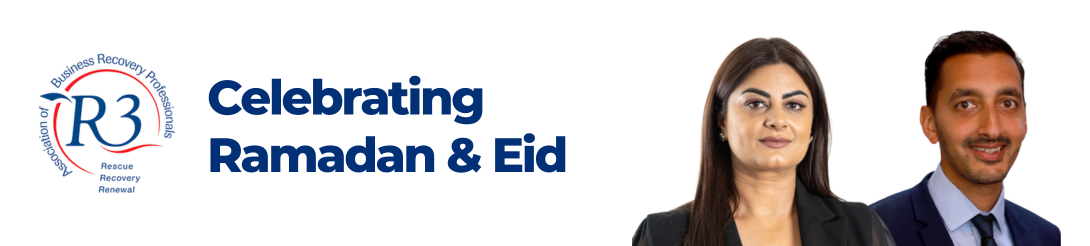
Faith series: Practising Ramadan and celebrating Eid with Asma Iqbal and Ali Walji
12 March 2026
As part of R3’s faith series, members share insights into how they observe and celebrate different religious practices and traditions.
In this Q&A, we spoke to Asma Iqbal, Partner at Chadwick, and Ali Walji, Associate Director at EY Parthenon, about what Ramadan means to them, how it shapes their working lives, and how support and understanding in the workplace can make a meaningful difference.
People often associate Ramadan with fasting, but could you share some of the other important aspects of Ramadan, and what it means to you?
Asma:
"Ramadan is much more than abstaining from food and drink from dawn to sunset. It’s a deeply spiritual time focused on reflection and repentance. During the holy month of Ramadan, Muslims increase their recitation of the Quran and attend special nightly prayers where long portions of the Quran are recited. Giving to charity (some of which is obligatory and other voluntary) is another key part of Ramadan, as it is believed that good deeds are multiplied during this time. Beyond fasting, Muslims are encouraged to practise patience and gratitude and to develop empathy for those less fortunate. The ultimate goal is spiritual purification."
Ali:
"Fundamentally, Ramadan is a period of recalibration. It invites Muslims to step back from daily distractions and reconnect with questions of purpose, why we are here, how we use our time, and how our choices affect others. Alongside fasting, Ramadan is about spiritual growth, compassion, justice and charitable action. Many Muslims increase Quran recitation, attend nightly community prayers and give generously."
"Charity is central to the month. Personally, I take part in several Ramadan charity and fundraising initiatives, supporting causes focused on poverty relief, education and community wellbeing. I also join initiatives across London to distribute essential items to people experiencing homelessness, including food packs, toiletries, warm clothing and hygiene items. Ramadan is a powerful reminder that faith must translate into service, empathy and human connection."
"I am also running 12 half marathons in 12 months as part of a personal challenge. Both Ramadan and long distance running require intention, resilience and daily discipline."
How does observing Ramadan shape a typical working day?
Asma:
"Ramadan significantly shapes my daily routine. The day begins before dawn with the pre fast meal, which for me is around 4am. After eating, I engage in morning prayers and often stay awake to catch up on emails. During the working day, prayer facilities at the office allow me to take a short ten minute break in the afternoon to pray."
"I prioritise focus based tasks earlier in the day and try to avoid meetings later in the afternoon, as energy levels tend to drop after around 3pm, particularly without coffee. I aim to leave work earlier than usual to break my fast with family, although this often means eating a date and drinking water in the car before arriving home."
"After breaking my fast, I attend night prayers. Sleeping patterns shift as I prepare for another early start the following day. Overall, my working day during Ramadan is about balance."
Ali:
"Ramadan naturally shifts the rhythm of the day. With evening prayers and community commitments, I am more intentional in structuring my working hours, focusing on analytical and high concentration tasks in the morning and scheduling collaboration later."
"We are quite fortunate in the UK this year, with fasting beginning around 5am and ending at approximately 6pm. Only a few years ago, fasts stretched from around 3am until 9.30pm, so the shorter hours are something many of us are genuinely grateful for. A verse from the Quran reminding us that God is with those who are patient becomes a guiding principle for me during the month and influences how I interact with colleagues."
"EY’s flexible working culture provides invaluable support. Hybrid working, adjustable start and finish times and a respectful approach to individual needs all help create space for wellbeing during Ramadan."
What wellbeing habits make the biggest difference for you during Ramadan?
Asma:
"Ramadan is about sustaining yourself spiritually, mentally and physically while continuing to function well at work. I build short reset moments into my day by taking time out for prayer and Quran recitation, allowing me to pause, reflect and recentre."
Ali:
"For me, wellbeing during Ramadan is about balance. That means balancing sleep, nutrition, hydration, spirituality and work. Suhoor, the pre-dawn meal, is important for setting up the day with nourishment that provides steady energy."
"Throughout the workday, intentional breaks, stretching and short moments of calm help maintain focus. The mindfulness Ramadan encourages often improves clarity and emotional balance."
How can workplaces be more supportive during Ramadan?
Asma:
"Workplaces can support colleagues who are fasting by offering flexible or adjusted hours, such as earlier start and finish times, avoiding important meetings late in the day and not centering all social gatherings around food and drink. Managers can also make a difference by checking in privately, providing quiet spaces for prayer or reflection and recognising that energy and concentration may dip later in the day. Hosting a voluntary Iftar event (the meal taken after sunset which breaks the day’s fasting) can also help foster inclusion and strengthen community connections."
Ali:
"Often, small and thoughtful adjustments make the biggest difference. Awareness of the last ten nights of Ramadan, which involve longer night prayers, can help colleagues understand why some people may be more tired or reflective."
"EY sets a strong example, from sharing guidance on supporting colleagues who are fasting to enabling flexible working arrangements. The firm’s UK holiday policy also allows individuals to swap public holidays for religious or cultural observances such as Eid, helping ensure people can mark these occasions in a meaningful way."
"This spirit of allyship is also reflected in the annual EY Fasting Challenge, which invites colleagues from different faiths and backgrounds to experience fasting for a duration that feels accessible to them. As the R3 and Insolvency Service Diversity Champion, these examples show how everyday awareness, flexibility, curiosity and kindness help build a truly inclusive workplace culture."
How are you planning to celebrate Eid al Fitr?
Asma:
"Eid begins with attending a large outdoor prayer, during which a charitable donation is made. The day then continues with a festive meal shared with family and visits to relatives. Ramadan and Eid emphasise forgiveness and reconciliation, and children typically receive gifts, often money. Eid al Fitr marks the celebration of discipline, generosity and spiritual renewal."
Ali:
"My day will begin with the Eid prayer, followed by spending time with family, sharing food, exchanging gifts and reflecting on the personal growth Ramadan brings. It is also an opportunity to reset intentions for the months ahead."
"EY has previously supported celebrations with thoughtful gestures such as providing Eid sweets and desserts in office kitchens, allowing colleagues to share in the celebration and learn more about the celebration in an inclusive way."
"Eid also continues the charitable spirit of Ramadan through Zakat al Fitr, the obligatory charity given at the end of the month to support those in need. It’s a reminder that compassion, solidarity and community remain central beyond Ramadan."
Looking ahead
As part of R3’s wider faith series, we’ll continue to share member insights from different religions, exploring practices, traditions and lived experiences. We hope to build greater understanding and celebrate the diversity that strengthens our profession.
 Dawn Boyall
 Amani Keynan
R3 members can provide advice on a range of business and personal finance issues. To find an R3 member who can help you, click below.